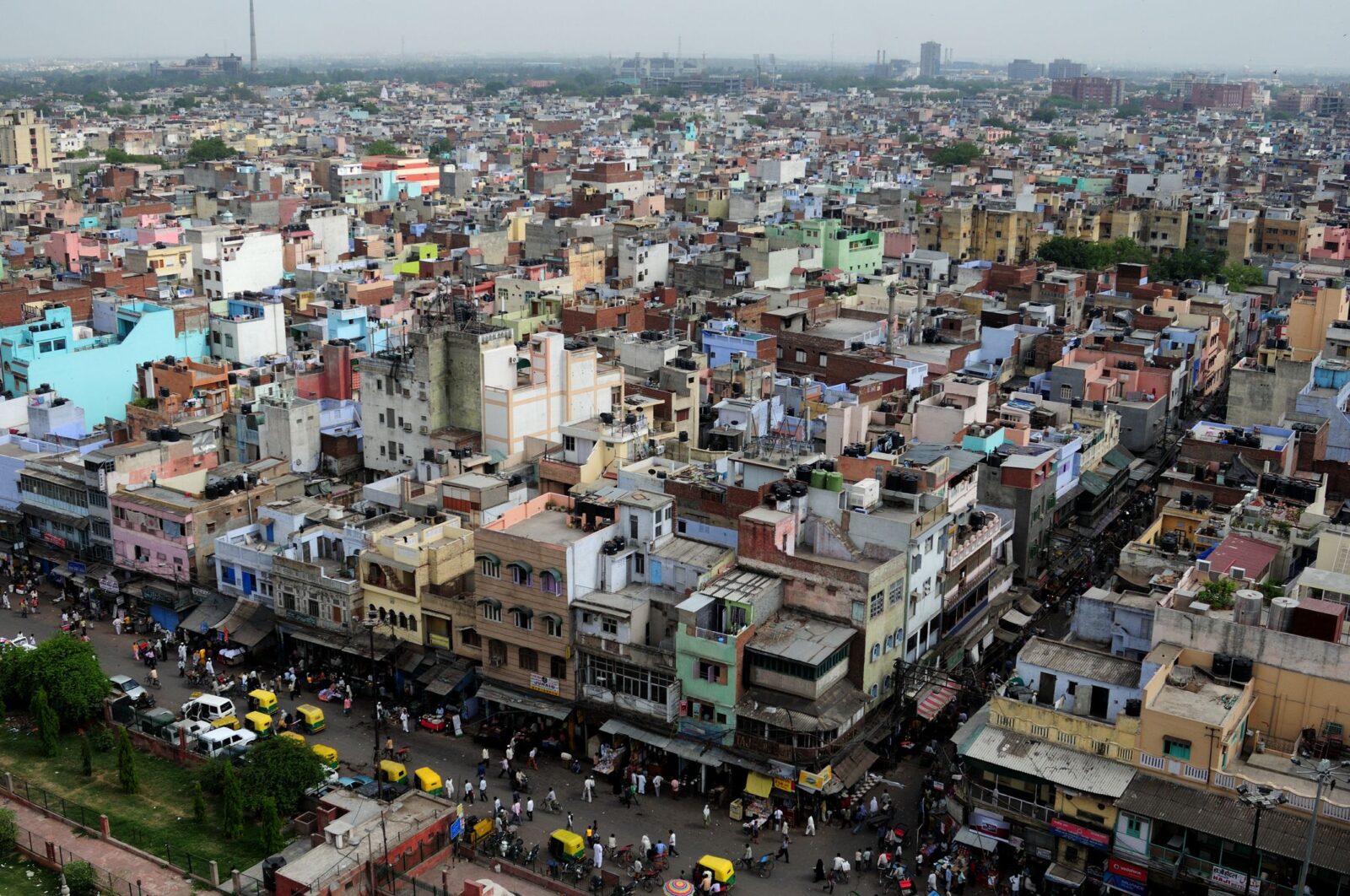
Millions of Delhi residents have lived for decades in colonies that grew without formal government approval — meaning no legal title to the land or homes they built. The PM-UDAY scheme was designed to fix exactly that problem, and the state government has now asked New Delhi to open the funding tap so the process moves faster.
Why Delhi’s CM Is Asking the Centre for Money
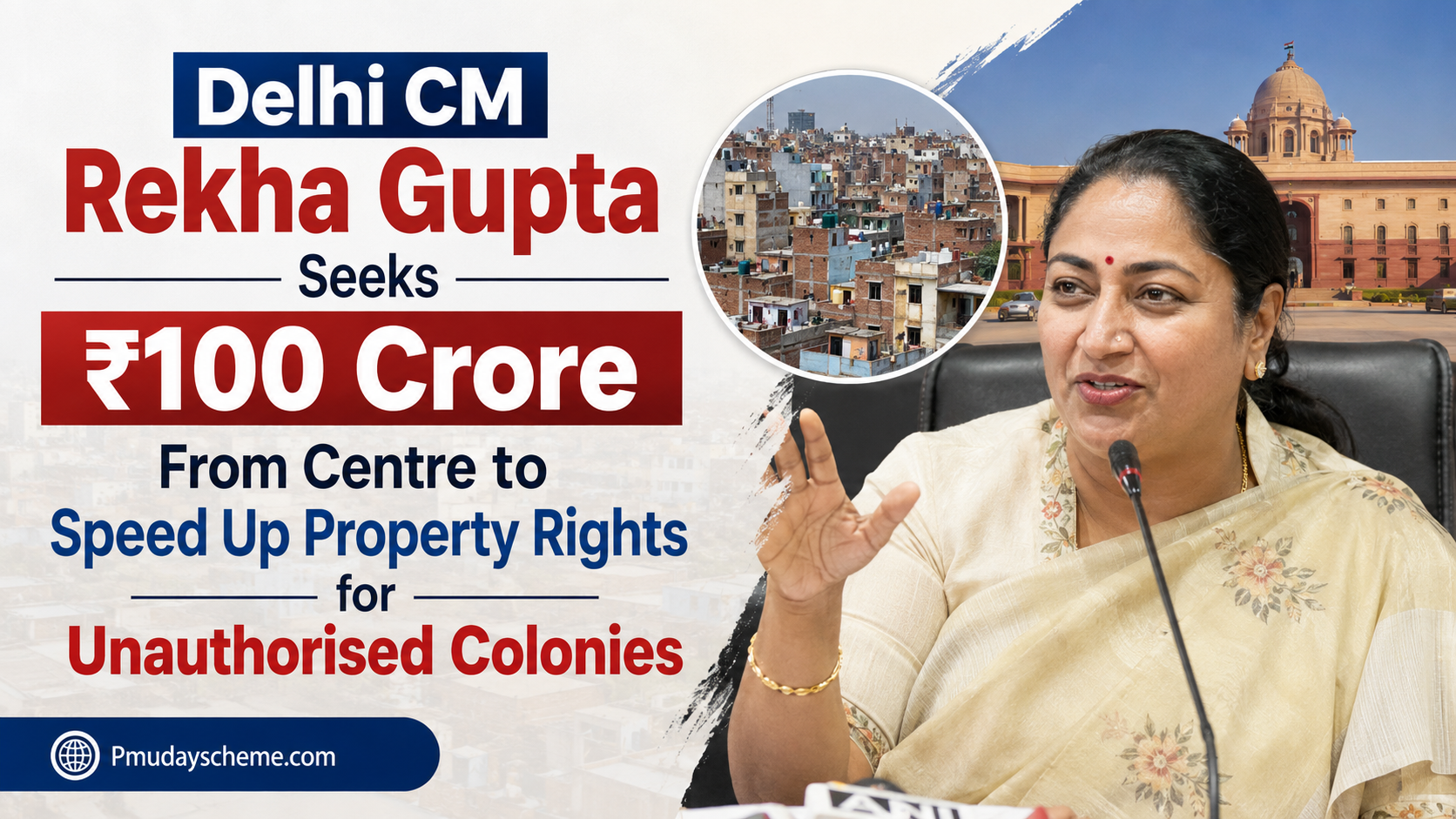
Chief Minister Rekha Gupta has formally requested ₹100 crore in first-phase financial assistance from the central government to accelerate PM-UDAY implementation across the city. The request was made through a letter addressed to Union Housing and Urban Affairs Minister Manohar Lal, seeking approval under the Urban Development Fund (UDF).
According to the Delhi government, the administrative groundwork for the scheme has already been notified and work is underway. The funds would go toward building the institutional machinery needed to process ownership claims at scale — land mapping, verification, and digitisation of property records — so residents aren’t stuck waiting months or years for paperwork to clear.
Gupta has also thanked the Centre for backing the scheme so far and pressed for quick approval so property-rights benefits reach unauthorised colonies without further delay.
What Is the PM-UDAY Scheme?
PM-UDAY stands for Pradhan Mantri Unauthorised Colonies in Delhi Awas Adhikar Yojana. It was launched in October 2019 with one core purpose: hand over legal ownership, transfer, and mortgage rights to people who bought property in Delhi’s unauthorised colonies but never received a proper deed.
Because these colonies developed outside official planning approval, residents were historically locked out of formal banking and legal channels — they couldn’t easily get a home loan against their property, sell it through a registered sale deed, or expect government infrastructure investment in the area. The scheme aims to unlock all three by converting occupation into recognised ownership.
The scale of the problem is significant. The scheme’s regularisation drive covers 1,511 of Delhi’s 1,731 identified unauthorised colonies, a change that is expected to benefit lakhs of families across the city.
Progress had been slow in the scheme’s early years, largely because colonies needed an approved layout plan from the Municipal Corporation of Delhi before residents could receive their deeds — and most colonies simply didn’t have one. A more recent policy revision dropped that layout-plan requirement, adopting an “as-is, where-is” approach that recognises a colony and its structures in their current form, regardless of whether streets or buildings match any official plan.
How the Rollout Will Work
Under the revised implementation plan referenced in Gupta’s letter to the Centre, the Delhi government has restructured how PM-UDAY will be executed on the ground:
- Nodal agency: The Revenue Department has been designated to lead implementation citywide.
- District-level cells: Dedicated PM-UDAY cells are being set up in all 13 districts of Delhi.
- Oversight: Each cell will be headed by an Additional District Magistrate (ADM), who will supervise survey work, document verification, and the broader ownership-recognition process.
This district-by-district structure is meant to decentralise the workload so verification and deed issuance don’t bottleneck at a single city-wide office.
What Residents Can Expect Next
For residents of the 1,511 colonies covered under the scheme, the near-term picture depends heavily on how quickly the Centre responds to the funding request. If the ₹100 crore is approved, the money is expected to fund the survey and digitisation work that has to happen before conveyance deeds can actually be issued — meaning faster processing once applications are filed, rather than an immediate change for anyone who has already applied.
Residents can track colony eligibility and application status through Delhi government and DDA channels once the process is live district-wise; the state government has indicated it wants delays minimised at every stage, from GIS survey to deed issuance.
Frequently Asked Questions
What does PM-UDAY stand for? Pradhan Mantri Unauthorised Colonies in Delhi Awas Adhikar Yojana — a central scheme granting ownership rights to residents of Delhi’s unauthorised colonies.
How many colonies are covered under the scheme? The regularisation push covers 1,511 unauthorised colonies out of 1,731 identified across Delhi.
Why did Delhi’s CM ask the Centre for ₹100 crore? To fund the administrative and technical backbone of the rollout — land mapping, verification, and record digitisation — so ownership documents can be issued without long delays.
Who is responsible for implementing PM-UDAY in Delhi? The Delhi government’s Revenue Department is the nodal agency, supported by dedicated cells in each of the city’s 13 districts, each led by an Additional District Magistrate.
Has the layout-plan requirement been removed? Yes. A 2026 policy revision dropped the earlier requirement for an MCD-approved layout plan, moving to an “as-is, where-is” recognition model.
Conclusion
The ₹100-crore request marks the latest step in a years-long effort to bring legal certainty to Delhi’s unauthorised colonies. Whether the rollout speeds up now largely hinges on how quickly the Centre releases the funds — but the administrative framework, from district-level cells to ADM oversight, is already in place and waiting to scale.
Sources: Business Today, PTI, The Statesman