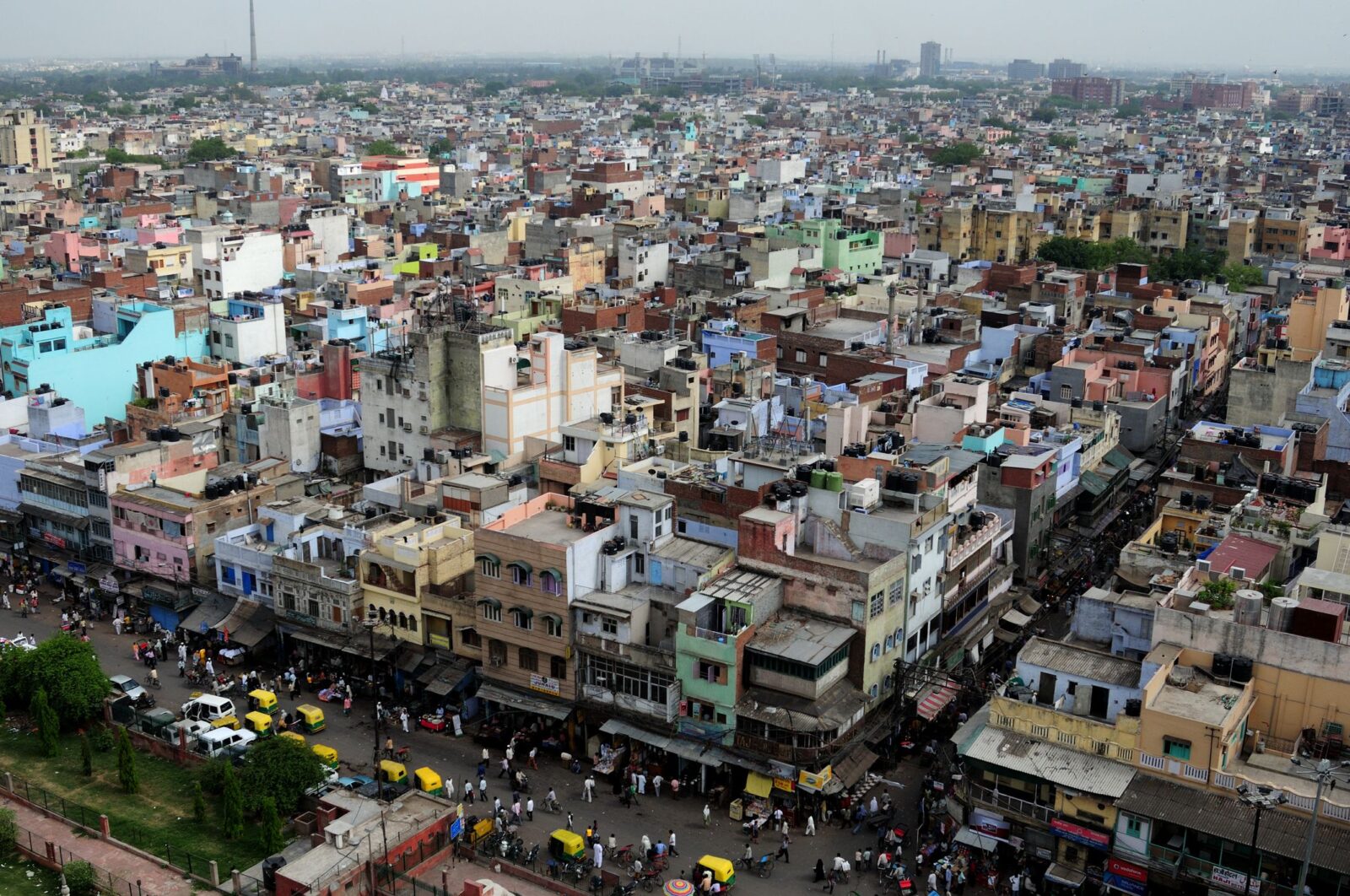
The MCD Standing Committee has formally cleared relief of up to 75% on the charges residents pay to regularise their homes under PM-UDAY — and the application window now runs to 31 January 2027. Here is the plain-English version of who qualifies, what it costs, and what it still does not give you.
What Actually Happened
On 20 November 2026, the Municipal Corporation of Delhi’s Standing Committee, chaired by Satya Sharma, formally cleared a concession of up to 75% on the charges MCD levies for regularising built-up property in unauthorised colonies covered by PM UDAY. The reduction had already been approved months earlier; the committee meeting converted that decision into a formal clearance, alongside 24 other proposals covering waste management, landfill reclamation, schools, property tax and civic facilities.
The reason behind the relief is blunt arithmetic. Very few residents have signed up. Around 40,000 properties have received a Conveyance Deed or Authorisation Slip under the scheme so far, against a population base of roughly 44.75 lakh people across 1,511 colonies. Officials have been open that the cost of regularisation is one of the reasons the response has been tepid — so the civic body cut the cost.
Two Different Things People Keep Confusing
Most of the confusion around PM-UDAY comes from treating one process as the other. There are two separate steps, run by two separate bodies, with two separate documents. The 75% rebate applies to the second one.
| PM-UDAY ownership rights | MCD regularisation | |
| What it gives you | Recognition of ownership, transfer and mortgage rights over the property | Recognition of the built structure, and a route to building-plan approval and redevelopment |
| The document | Conveyance Deed (property on government land) or Authorisation Slip (property on private land) | Certificate of Regularisation issued by MCD |
| Who issues it | Revenue Department, GNCTD, with DDA support | MCD / the local urban body |
| Where you apply | PM-UDAY portal (pmuday.ncog.gov.in) | MCD SWAGAM portal (mcdonline.nic.in/swagam) |
| Deadline | 31 January 2027 for fresh applications (extended from 31 October 2026) | No closing date announced; the 75% rebate is linked to completing regularisation in the rebate window |
In one line: the rebate makes the second step cheaper, but you can only take the second step if you have completed the first. A resident with no Conveyance Deed or Authorisation Slip cannot use SWAGAM at all.
What the 75% Rebate Covers
MCD now charges for regularisation under four heads only, and the rebate applies to all four:
- Compensatory Regulatory Charge — the core charge for permitting construction that happened without approval.
- C&D Charge — construction and demolition waste related levy.
- Development Charge — towards the cost of civic infrastructure the colony draws on.
- Admin/IT Charge — the administrative and processing cost.
On top of this, from 20 August 2026 the corporation had already removed several charges that used to be levied under the Unified Building Bye-Laws (UBBL), 2016, for regularising construction existing up to 6 April 2026 in PM-UDAY colonies. Those included the permit fee, betterment charge, levy, additional levy, plinth fee, pre-occupancy charge, and charges relating to construction without approval. Labour cess is also outside MCD’s regularisation charges.
As a working illustration — and it is only an illustration, because the official release does not publish per-property rates — if the four charges on a property added up to ₹1,00,000, a full 75% rebate would leave ₹25,000 to pay. Your actual figure depends on plot size, built-up area and colony category, and you should read it off the fee calculation on the portal rather than from any flat number quoted online.
The Deadline Moved — Read This Carefully
When the rebate was announced in September 2026, it was tied to completing regularisation by 31 October 2026. The Delhi Government’s Revenue Department had separately fixed the same date as the cut-off for fresh PM-UDAY applications.
At the end of October 2026, with only a few thousand applications on record, the Revenue Department extended the cut-off for applying for conveyance deeds and authorisation slips to 31 January 2027, and described it as the final extension. MCD’s stated position is that if the government’s last date moves, the rebate stays available during the extended period — so the relief should travel with the new date. Treat this as reported policy rather than a published order, and confirm the live date on the portal before you plan around it.
The lesson is simple and slightly uncomfortable: the scheme has been extended before, but relying on a further extension is not a plan. The documents you need take weeks to assemble, and the queue is longest in the final fortnight.
Who Is Eligible
- The property must fall inside one of the 1,511 notified unauthorised colonies — the PM-UDAY app’s colony locator settles this before you spend a rupee on paperwork.
- The colony must have existed by June 2014, with construction and possession established before January 2015 for ownership recognition.
- For the MCD regularisation step, construction existing up to 6 April 2026 is what the current window addresses, on an as-is-where-is basis — no approved layout plan is required.
- You need some documentary chain of possession: a registered sale deed, registered gift deed, or the latest set of GPA with agreement to sell, possession letter and payment proof.
Documents to Have Ready
This is where most early rejections happen, and almost all of them are documentation gaps rather than ineligibility. Assemble a single folder with:
- Aadhaar and PAN card of the applicant
- Latest GPA, or agreement to sell, with the full previous chain of ownership documents in serial order
- Possession letter and payment receipts showing consideration paid
- Proof of construction before the applicable cut-off — electricity or water bills, property tax receipts, dated photographs
- Property tax mutation document, if you have one
- Indemnity bonds on stamp paper and a self-declaration, in the formats published on the portal
- Passport photographs of the applicant and photographs of the property
One procedural change is worth knowing about. From 27 July 2026, MCD has been issuing regularisation certificates through listed professionals on a self-assessment basis, and has moved towards an affidavit-based process with third-party verification. In practice this means an architect or licensed professional can certify the built-up area, which removes a queue that used to sit with MCD inspectors.
How to Apply, Step by Step
- Step 1 — Confirm your colony. Use the colony locator to check that your address falls in the notified list, and note your ward and zone.
- Step 2 — Get your ownership document. File on the PM-UDAY portal, complete the form, upload the document set, and follow up at the PM-UDAY cell in your district magistrate’s office. This produces the Conveyance Deed (government land) or Authorisation Slip (private land).
- Step 3 — Register the deed. Take the issued deed to the sub-registrar’s office within three months. Stamp duty is calculated on the deed value, not the circle rate.
- Step 4 — Apply on SWAGAM. Log in to mcdonline.nic.in/swagam, select your colony, enter your PM-UDAY Case ID or upload the issued deed, and submit the structure details. The 75% rebate is applied to the four charges here.
- Step 5 — Collect the Certificate of Regularisation. This is the document that recognises the built structure and opens the door to building-plan approval and redevelopment later.
What This Relief Does Not Do
It is worth being precise, because a lot of WhatsApp forwards are not. A conveyance deed or authorisation slip recognises your ownership; it does not guarantee a home loan. Banks lend against mortgageable, clear title on a registered, regularised property, and they apply their own valuation and legal checks. Colonies without completed regularisation and registration remain difficult collateral in most lenders’ books.
It also does not legalise construction added after the cut-off, does not cover colonies that fall outside the notified 1,511, and does not settle private civil disputes over who owns a plot. Councillors at the same meeting raised exactly this — that residents still struggle to secure the underlying ownership documents, which in turn makes registration harder.
Three Practical Pointers
- Start with the document chain, not the form. Old GPAs and agreements to sell with a broken chain are the single biggest cause of rejection. Get them in serial order first.
- Do not pay agents for ‘guaranteed’ approval. The process is portal-based, the fee is calculable, and MCD has published listed professionals who can certify on self-assessment basis. Fixed-fee paperwork help is fine; anyone promising an outcome is not.
- Assume the date will not move again. If the extension holds, you lose nothing by filing early. If it does not, you lose the window entirely.
Quick FAQ
Is the 75% rebate automatic?
No. It is applied to the four MCD charges when you complete regularisation within the rebate window. If your application sits incomplete past the relevant date, the relief is at risk.
Does the rebate reduce what I pay the sub-registrar?
No. Stamp duty and registration charges are separate, state-level levies calculated on the deed value. The rebate is confined to MCD’s regularisation charges.
I already have a Conveyance Deed. Do I still need to do anything?
Yes, if you want the structure itself recognised. The deed gives you ownership rights; the Certificate of Regularisation from MCD relates to the built-up area.
Can I sell the property after this?
The ownership document recognises transfer rights, which is what makes a sale possible in practice. Buyers and lenders will still want a registered, regularised property, which is why completing both steps matters.
Where do I check my colony’s status?
The colony locator on the official PM-UDAY app and the colony list on the PM-UDAY portal are the two sources to use before starting.
The Bottom Line
For roughly 45 lakh people in Delhi’s unauthorised colonies, this is the most affordable the paperwork has ever been. A 75% reduction on the regularisation charges, layered on top of charges already dropped in August, brings the cost of formalising a home down to a range most families can actually plan for — and the extended application window gives them a few more months to assemble documents that should have been organised years ago.
The relief, though, is conditional on doing something. Only about 40,000 properties have received ownership documents so far out of a base of lakhs. The rebate does not find you; you have to file.
Sources: PTI and ANI reports carried by India Today, The Times of India / ETRealty, Republic World and The News Mill (27–28 September and 20 November 2026); MCD Standing Committee statements by Chairperson Satya Sharma; The Tribune and ETGovernment reports on the Revenue Department’s extension of the PM-UDAY deadline to 31 January 2027 (30 October 2026); PM-UDAY scheme FAQs on dda.gov.in; MCD SWAGAM portal documentation.
Disclaimer: This article is an explanatory summary of publicly reported policy decisions and is not legal, tax or financial advice. Fee calculations, deadlines and eligibility are subject to change and to the specific facts of each property. Verify the current position on the official PM-UDAY and MCD SWAGAM portals, or with a qualified professional, before acting.